


PRIVACY POLICY
Our Contract (E-SIGN)
You are entering into a binding agreement with the real estate brokers and agents who operate the website www.chandlerhomesforsale.net, including their parent companies, subsidiaries, and affiliates (collectively, the "Company," "we," "us," and "our"). By (1) using this website ("browsewrap"), and (2) submitting your information, agreeing to this Privacy Policy ("clickwrap"), and creating a user profile, you provide your express written consent to all terms outlined below, as well as our Terms of Use. Your electronic agreement serves as your electronic signature and has the same legal effect as a handwritten signature.
You may request a paper copy of this agreement by calling us at (602)-730-2143 or emailing us at [email protected] You may also withdraw your consent at any time by following the opt-out procedures described in the "Our Communications With You" section below.
We are committed to protecting your privacy. This Privacy Policy explains the types of Personal and Usage Information we collect, how that information is collected, used, and shared, and your choices regarding our use of your information. It also outlines the measures we take to safeguard your personal information and how you can review or correct the information we hold about you.
This Privacy Policy applies to all web pages, mobile applications, email lists, and other information, including Personal Information, collected or owned by us, regardless of the method of collection (e.g., mail, fax, email, sign-up/sign-in pages), including any online features, services, or programs we provide (collectively, the "Web Properties"). This Privacy Policy does not apply to any web page, mobile application, social media site, or information owned or collected by any other entity.
By accessing and using our Web Properties, you consent to the collection and use of your information as described in this Privacy Policy. Your use of the Web Properties is also subject to our Terms of Use.
Our Communications With You (TCPA Consent for United States Residents)
Express Written Consent:
By submitting your contact information, you provide your express written consent to receive communications from us at the email addresses and phone numbers you enter into our contact form, or that you later provide.
Types of Communications:
These communications may include calls, text messages (SMS or MMS), emails, faxes, and other forms of electronic contact. Messages may include telemarketing content, property updates, or other real estate-related information.
Use of Autodialing:
We may use an automatic telephone dialing system ("auto-dialer"), which may deliver prerecorded messages or texts. Standard carrier rates and fees may apply.
No Purchase Necessary:
Consent to receive these communications is not a condition for purchasing any property, goods, or services.
Revoking Consent / Opt-Out:
You may withdraw your consent at any time:
Text Messages: Reply “STOP” to any text message. This will automatically revoke your consent to receive future text messages. You may receive a final confirmation message.
Email: Click the “unsubscribe” link in any email. This will automatically revoke your consent to receive future emails.
We will make commercially reasonable efforts to honor other reasonable opt-out requests, but it may take up to 30 days to stop communications if you use methods other than the automatic reply “STOP” or “unsubscribe.”
Communication Frequency:
The number of messages you receive may vary based on the preferences and practices of the real estate professional contacting you.
Past Communications:
Your consent here also confirms your consent to receive electronic communications from us in the past at the email addresses or phone numbers you provided.
Your Representations and Warranties:
By providing your contact information, you represent and warrant that:
1. You are at least 18 years old.
2. You reside in the United States (or Canada, in which case Canadian consent rules apply).
3. You are not registered on any national or state Do Not Call registry.
4. You are the account holder for the email addresses and phone numbers provided, or you have authorization from the account holder to provide this consent.
5. The email addresses and phone numbers you provided are accurate, and you will notify us if any are reassigned or used by another person.
Mobile Service Notice (Arizona)
Our mobile services are available only in certain states, including Arizona. Some mobile features may not be compatible with your carrier or device. Please contact your mobile carrier with any questions regarding compatibility, data usage, or service limitations.
Dispute Resolution – Arbitration Agreement (Mandatory Binding Arbitration and Class Action Waiver)
PLEASE READ THIS SECTION CAREFULLY.
This Arbitration Agreement affects how legal claims between you and us are resolved. If either party elects arbitration, you waive your right to a jury trial and your right to participate in a class action, whether in court or in arbitration.
Arbitration allows a neutral third party (the arbitrator) to resolve a Claim without a judge or jury. Either you or we may require arbitration of a Claim at any reasonable time—even after a lawsuit has already been filed. If either party refuses to submit to arbitration after a valid demand, the refusing party will bear all costs and attorney’s fees incurred by the other party in compelling arbitration.
Neither you nor we may:
Join, consolidate, or combine Claims with or against others;
Participate in a class action or representative action in arbitration;
Act on behalf of the public or in a private attorney general capacity.
If arbitration is elected, you do not have the right to:
Have a jury or court decide the Claim;
Conduct discovery to the same extent as in court;
Participate in a class or representative action;
Join or consolidate your Claim with another person’s claim;
Appeal on the same basis available in court (appeal rights in arbitration are limited).
This Arbitration Agreement governs when and how a “Claim” (defined below) relating to the Terms of Use or Privacy Policy may be arbitrated.
The terms “we,” “us,” and “our” refer to Nancy Wittenberg, including any successors, assigns, affiliates, employees, officers, directors, and any third parties providing products or services related to these Terms if named by you in a dispute.
a. Your Right to Reject Arbitration
You may reject this Arbitration Agreement by mailing a written rejection notice within 30 days of accepting the Terms of Use.
Send your notice to:
Arbitration Rejection
Nancy Wittenberg
1640 S Stapley Dr #241, Mesa, AZ 85204
Your rejection notice must include:
Your full name
Your mailing address
Your phone number
The date you accepted the Terms of Use
Your signature
Rejecting this Arbitration Agreement applies only to this specific agreement within these Terms of Use and Privacy Policy. It does not affect any other agreement or previously existing obligation to arbitrate.
b. What Claims Are Covered
“Claim” means any claim, dispute, or controversy between you and us—whether existing now or arising in the future—that relates in any way to:
These Terms of Use or the Privacy Policy
Your use of this website
Your account
Any transaction involving your account
Any disclosures, promotions, advertisements, warranties, or representations
Communications between you and us
Any product or service provided by us or a third party in connection with this site
The collection of amounts owed
Compliance with applicable laws or regulations (including the Telephone Consumer Protection Act)
Any relationship resulting from the above
“Claim” is interpreted as broadly as possible, and includes:
Initial claims, counterclaims, cross-claims, third-party claims
Claims under federal, state, local, or administrative law
Claims based on contract, tort, fraud, consumer protection, statute, equity, or common law
Claims for monetary, injunctive, declaratory, or equitable relief
Claims that arose before this Agreement took effect
Claims NOT Covered
“Claim” does not include:
Disputes about the validity or enforceability of this Arbitration Agreement, including the Class Action Waiver—those must be decided by a court, not an arbitrator.
Requests to a court for provisional remedies, such as injunctions, restraining orders, property preservation orders, foreclosure, attachment, replevin, garnishment, eviction, or appointment of a receiver.
Exercising self-help remedies by either party.
Individual court actions only to prevent self-help remedies and not involving monetary damages.
Individual actions you bring in small claims court, unless transferred, removed, or appealed—if that happens, we may choose arbitration.
c. Electing Arbitration & Starting Arbitration
Either party may elect arbitration of a Claim by:
Giving written notice to the other party, or
Filing a motion to compel arbitration in a court case.
The party asserting the Claim (the party seeking money or other relief) is responsible for initiating arbitration, even if the other party elected arbitration.
Examples:
If you sue us and we compel arbitration, you must file the arbitration.
If we sue you and you counterclaim, and we compel arbitration of your counterclaim, you must file the arbitration.
Election of arbitration for any new or later-asserted Claim may occur even if litigation has begun. Litigation activity does not waive arbitration rights.
(d) Choosing the Administrator
The party initiating arbitration must choose one of the following arbitration administrators (“Administrator”):
American Arbitration Association (AAA)
JAMS
If the selected Administrator is unable or unwilling to serve, the other will serve. If neither can serve, we and you will mutually select an Administrator or arbitrator; if we cannot agree, a court will appoint one.
No Administrator may administer an arbitration if it has any policy that conflicts with the Class Action Waiver.
All arbitrators must be attorneys with 10+ years of experience or retired judges.
Arbitration must follow this Arbitration Agreement and, where not inconsistent, the Administrator’s rules.
(e) Class Action Waiver
If arbitration is elected, neither you nor we may:
Participate in a class action, private attorney general action, or representative action;
Act as a class representative or class member;
Consolidate your Claim with anyone else’s.
The arbitrator has no authority to hear any class or representative arbitration.
This waiver does not apply to any lawsuit by a federal or state agency seeking relief on behalf of a class of consumers—including you.
(f) Location of Arbitration
Any arbitration hearing you attend must take place at a location reasonably convenient to your residence.
(g) Cost of Arbitration
At your written request, we will pay all filing, hearing, and arbitrator fees after you pay only the equivalent of a court filing fee (and only if required).
You may also request a fee waiver from the Administrator.
We will pay any fees we are required to pay under law or Administrator rules.
If you prevail and applicable law requires it, we will pay your reasonable attorney, witness, and expert fees.
We will not seek reimbursement of our fees unless:
The arbitrator finds you acted in bad faith under Federal Rule of Civil Procedure 11(b), AND
Doing so does not invalidate this Agreement.
Any party may request a brief written explanation of the arbitrator’s award.
(h) Governing Law
This Arbitration Agreement is governed by the Federal Arbitration Act (FAA).
The arbitrator must:
Apply applicable statutes of limitation and privileges
Apply substantive law as a court would
Issue any relief a court could issue in an individual action (including punitive damages and injunctive relief)
All parties must take reasonable steps to complete arbitration within 180 days after the Claim is filed.
(i) Right to Discovery
Either party may request that the arbitrator expand discovery beyond Administrator rules. The arbitrator has discretion to grant or deny such requests.
(j) Arbitration Result & Right of Appeal
The arbitrator’s award may be entered as a judgment in any court with jurisdiction.
The arbitrator’s decision is final and binding except for appeals allowed under the FAA.
If the Claim exceeds $25,000, either party may appeal to a three-arbitrator panel within 30 days of the award.
The appeal panel reviews the matter de novo—starting fresh.
Appeal costs follow the rules in Section (g).
The panel’s award is final, subject only to FAA judicial review.
(k) Rules of Interpretation
This Arbitration Agreement survives termination of the Terms, legal proceedings, and bankruptcy (where permitted by law).
If any provision is deemed invalid, the rest remains enforceable except:
(A) Class Action Waiver
The Class Action Waiver is essential and non-severable.
If it is limited, voided, or found unenforceable, then this entire Arbitration Agreement becomes null and void for that proceeding.
(B) Claims for Public Injunctive Relief
If a court finds that the arbitrator cannot award public injunctive relief:
The injunctive claim proceeds in court
Any individual monetary claims proceed in arbitration
The court should stay the injunctive claim until arbitration concludes
Public injunctive relief cannot be arbitrated.
(l) Notice of Claim; Right to Resolve; Special Payment
Before starting arbitration or a lawsuit, the Claimant must send a written Claim Notice and allow 30 days to resolve the Claim.
Your Claim Notice must include:
Full name
Address
Telephone number
Any relevant account or transaction information
Description of the Claim
The specific relief requested
You may only send a Claim Notice on your own behalf.
If:
You send a valid Claim Notice,
We do not offer the requested relief before the arbitrator is appointed, and
The arbitrator later awards you that relief (or more),
→ The arbitrator must award you at least $7,500, plus any fees and costs required by law.
This $7,500 is one total minimum award for all Claims brought in that arbitration.
Governing Law
These Terms and Conditions of Use, along with any dispute that may arise between you and the Company or its affiliates, will be governed by the laws of the State of Arizona, without regard to conflict-of-law principles. The Arbitration Agreement is governed exclusively by the Federal Arbitration Act.
Your Consent to Future Changes
We may update or change the Website, these Terms of Use, or our Privacy Policy at any time. Any changes become effective immediately upon posting on this webpage, regardless of whether you receive direct notice.
You should review these policies regularly.
Your continued use of the Website after changes are posted constitutes your express agreement to the updated terms.
If you wish to opt out of future changes, you must send us a written notice by email or mail:
Email: [email protected]
Address:
Nancy Wittenberg
1640 S Stapley Dr #241, Mesa, AZ 85204
Your opt-out becomes effective 10 days after we receive your notice. If you opt out, the Terms of Use in effect on the date you originally submitted your information—or the last version you did not opt out of—will continue to apply.
Types of Information Collected
We and our third-party service providers may collect two types of information when you use the Website: Personal Information and Usage Information.
Personal Information
Personal Information may include:
Name, address, phone number, or email
Demographic details such as date of birth or residency
Job title or business information
Preferences related to marketing or communications
Inquiries about services or properties
Feedback or messages you submit
Financial information (e.g., bank or credit card information)
Photos, videos, or uploaded media
Any other information you voluntarily provide
You may choose not to provide certain information; however, doing so may limit our ability to provide requested services.
Usage Information
Usage Information may include:
IP address and device data
Browser details and language
Operating system and platform
Device identifiers
Pages visited, time spent, clicks, and navigation actions
Cookies, analytics, and tracking data
Web logs and system diagnostics
If you access the Website while logged into your account, we may associate Usage Information with your identity to improve your experience.
How Information Is Collected
We may collect information from:
Forms and submissions you provide
Your communications with us
Your device or browser when accessing the Website
Third-party partners and service providers
Cookies, analytics, pixels, and tracking tools
Chat systems, customer service interactions, and automated messaging
Public or lawful information sources
Cookies and Tracking Technologies
We may use:
Cookies (session and persistent)
Tracking pixels
Web beacons / clear GIFs
Unique identifiers
Analytics tools such as:
Meta (Facebook) Pixel
Google Analytics
Microsoft Clarity
FullStory
You may adjust your browser settings to decline or delete cookies, though doing so may limit website functionality. You also have access to industry-standard opt-out links for major browsers and tools, exactly as listed in your original text.
Use of Collected Information
We may use collected information to:
Operate, manage, and improve the Website
Personalize your Website experience
Respond to inquiries and provide requested services
Enhance communications, text messaging, and email interactions
Manage your user account
Conduct marketing or service-related outreach
Improve user experience through analytics
Process transactions or payments
Consider job applicants (when applicable)
We may use aggregated or de-identified data without restriction.
Disclosure of Your Information
We may share your information with:
Service providers assisting with hosting, analytics, marketing, communications, or operations
Trusted business partners or affiliated professionals (such as real estate brokers or lenders) when you express interest
Communication service providers, analytics companies, and technical vendors
The parties receiving your information are required to process it in compliance with this Privacy Policy or in a similar, industry-standard manner.
Transfers of Information
We reserve the right to transfer your Personal Information, as well as any information about or from you, in connection with a merger, sale, or other disposition of all or part of our business and/or assets. In the event of bankruptcy, reorganization, insolvency, receivership, or an assignment for the benefit of creditors, we cannot make any representations regarding how your Personal Information may be used or transferred.
By using the Website, you expressly agree and consent to the use and/or transfer of your Personal Information in any of the above-described circumstances.
We are not responsible for any breach of security by any third parties or for any actions of any third parties who receive information from us.
We may also disclose your Personal Information with your permission or pursuant to your direction.
Security
We are committed to protecting your personal information and use reasonable technical, administrative, and physical safeguards designed to prevent unauthorized access, use, or disclosure.
You are responsible for maintaining the confidentiality of your username, password, and account information. You agree to:
Immediately notify us of any unauthorized use of your account or breach of security.
Log out of your account at the end of each session.
Although we take steps to secure your information, no method of transmission over the Internet is entirely secure, and we cannot guarantee absolute protection.
Reviewing and Correcting Your Personal Information
You may request to review or correct your Personal Information by contacting us directly. If you have a user account, you may also update certain information through your account. We may take steps to verify your identity before granting access or making corrections.
Please notify us of any changes to your mailing address, phone number, or email address to help us maintain accurate records.
Deleting Your Personal Information
You may request deletion of your Personal Information by contacting us. We may take steps to verify your identity before processing your request.
If your information is deleted, certain services may no longer be available to you.
Children’s Information
This Website is not intended for children under the age of thirteen (13). By using the Website, you affirm that you are at least eighteen (18) years old, an emancipated minor, or have the consent of a parent or legal guardian.
Links to Other Sites
The Website may contain links to third-party sites, including affiliates and professional organizations. We are not responsible for the content, security, or privacy practices of these external sites. You should review their privacy policies to understand your rights.
International Users
If you access the Website from outside the United States, you consent to the collection, transfer, and processing of your Personal Information in the United States in accordance with this Privacy Policy.
Choices With Your Personal Information
Providing Personal Information is optional; however, certain services require it. You may opt out of disclosures or uses of your Personal Information that are incompatible with the purposes for which it was originally collected or subsequently authorized by notifying us. Opt-outs do not apply to information needed to provide requested services.
State-Specific Privacy Rights
Certain state privacy laws (such as those in California, Oregon, Nevada, and Vermont) may grant you additional rights regarding your Personal Information. If applicable, you may request:
Information about data we have shared
Restrictions on marketing-related disclosures
Opt-outs of certain types of sharing
To exercise any applicable state-specific rights, please contact us using the information below.
“Do Not Track” Signals
We currently do not respond to “Do Not Track” signals because no consistent industry standard has been established.
Overview
Ensuring your website is compliant is a crucial part of passing A2P 10DLC registration and maintaining long-term SMS deliverability. Carriers
and compliance partners review your website to verify that your brand is legitimate, transparent, and aligned with approved messaging
standards.
Website compliance is also a key requirement enforced by U.S. carriers and The Campaign Registry (TCR), who expect your site to clearly
display accessible, accurate, and verifiable information. These elements help protect consumers and ensure that only wanted, consensual
messaging is sent.
This guide outlines the essential website requirements you must meet before submitting your SMS campaign for approval.
1. Why Website Compliance Matters
During A2P 10DLC review, carriers validate your:
Brand identity
Legitimacy of your business
Accuracy of contact information
Transparency around how SMS consent is collected
Any missing, mismatched, or incorrect website elements can result in campaign rejection or delays. A compliant website increases your
chances of approval and protects your messaging reputation.
2. Website Compliance Requirements
Use the checklist below to ensure your website meets all necessary compliance standards before submitting your application.
A) Website Link Requirement
Please use a website URL starting with https:// (not http).
B) Opt-In Method Clearly Described
Your campaign description must state the exact opt-in method(s) you use, such as:
Website Form
-QR Code
-Paper Form
-Kiosk
-Facebook Lead Form
-Verbal
This helps reviewers understand where and how consent is collected.
Note: One of the most important elements of this process is domain consistency between your website and the opt-in form URL.
C) Include Links to All Opt-In Flows
Anywhere you collect SMS consent—forms, QR code pages, lead forms—should be linked or documented.
Upload screenshots where applicable so compliance reviewers can see proof of consent.
D) Website Must Be Live and Accessible
Your website should:
Load without errors (no 404, 500, password gates, or “coming soon” pages)
Be accessible to reviewers without logging in
Display your brand identity clearly
Inactive or “broken” websites are a frequent cause of A2P rejections.
E) Provide Both the Business Website URL and Opt-In Form URL
If your opt-in happens on a different page than the homepage, you must provide:
Business Website URL
Opt-In Form URL
Important: For website-based opt-ins, the domains must match (e.g., mybusiness.com and forms.mybusiness.com).
F) Your Opt-In Form Must Be Fully Compliant
Your opt-in form must include:
Business name
Clear, express consent wording
Message purpose (promotions, alerts, notifications, reminders)
STOP/HELP instructions
Message frequency (or “Message frequency varies”)
Optional but recommended: “Message & data rates may apply”
Phone number field
Links to:
Terms of Service (TOS)
Privacy Policy
Missing any of these items may result in rejection.
G) Add Your TOS & Privacy Policy to Your Website and Form
Your Terms of Service and Privacy Policy must:
Be publicly accessible
Include your business name
Match the identity you provide during brand registration
Appear wherever SMS consent is collected
These documents help verify your legitimacy and compliance.
H) Display Business Contact Information
Your website must show:
Business address
Support email
Phone number
These details must match the information submitted in your Brand registration.
I) No Selling or Buying Leads
Your website must not reference:
Purchasing leads
Selling leads
Affiliate lead programs
Lead reselling
Carriers blacklist businesses associated with lead trading. If any such wording appears on your website, your campaign may be automatically
rejected.
J) DBA Names Must Be Displayed if Applicable
If you operate under a “Doing Business As” name, your website must display:
DBA name in footer
OR
In the Privacy Policy
OR
Terms & Conditions
This ensures the brand used in registration matches what appears publicly.
3. Common Reasons for Rejection
The website is offline, not publicly accessible, or cannot be verified.
The privacy policy is missing or does not clearly outline how data is handled or restricted.
The opt-in process is unclear, hard to validate, or not properly documented.
Business details on the website do not match the information submitted during registration.
4. Best Practices
Use simple, easy-to-understand language throughout your site and forms.
Ensure compliance links (privacy policy, terms of service, etc.) are clearly visible and easy to navigate to.
Keep your website current and make sure all compliance-related information is publicly accessible.
5. Summary: What a Compliant Website Looks Like
A compliant website must:
Be live, complete, and error-free
Accurately display brand details & contact information
Contain required legal documents (TOS + Privacy Policy)
Match your A2P brand identity
Include compliant opt-in language wherever SMS consent is collected
Avoid any reference to buying/selling leads
Use consistent domains for website and opt-in forms
With these elements in place, your campaign is much more likely to pass the A2P 10DLC approval process.
Contact Information
If you have questions, comments, want to access your Personal Information, or wish to opt out of certain sharing, please contact:
Nancy Wittenberg
1640 S Stapley Dr #241, Mesa, AZ 85204
Phone: (602)-730-2143
Email: [email protected]
Copyright Notice
Copyright © 2026. Nancy Wittenberg. All Rights Reserved.
Effective Date: January 1, 2026
Last Updated: January 1, 2026
PRIVACY POLICY
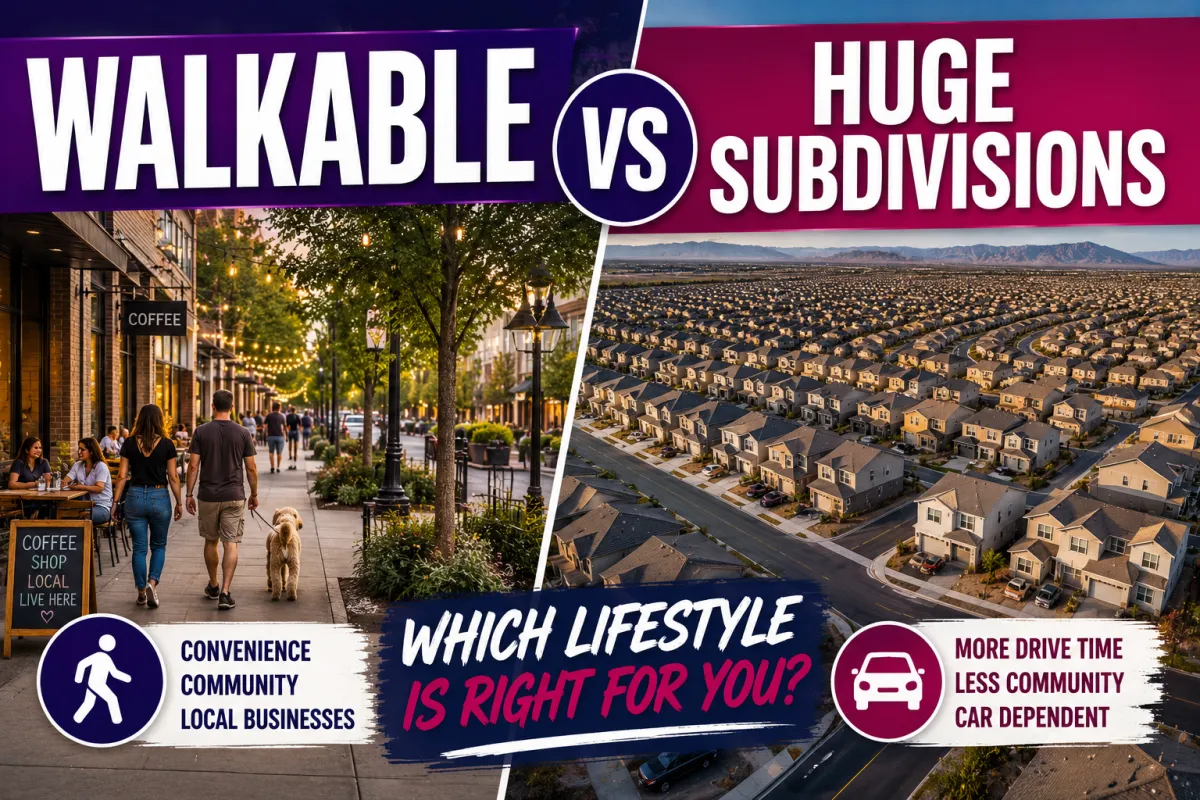
What the 2026 NAR Survey Says About Walkable Communities and What It Means for the Southeast Valley
What the 2026 NAR Survey Says About Walkable Communities and What It Means for the Southeast Valley
What the 2026 NAR Survey Actually Found 1
What Walkable and Mixed-Use Actually Mean Here 2
How the Southeast Valley Got Built 3
The Last Patches of Land Are a Real Choice 4
When the National Association of REALTORS® asked 2,000 Americans to choose between two communities, the results were clear. Fifty-nine percent chose the neighborhood with smaller yards where everything was within walking distance. Forty-one percent chose the large-yard neighborhood where driving was required for every errand.
That's not a close call. And it's a shift. In every prior version of this survey, going back to 2017, that split was 53/47. In 2026, it moved to 59/41.
Something is changing in what buyers want from the places they live. The Southeast Valley was built almost entirely around the model that 41 percent of buyers now say they prefer. That was the right model for the time. The question is whether it's the right model for the land that's still left to develop.
What the 2026 NAR Survey Actually Found
NAR's Community and Transportation Preferences Survey is conducted every three years. The 2026 version polled 2,000 adults across the 50 largest U.S. metro areas in May 2026, released July 10. The supporting numbers fill in a more complete picture of what buyers say they want.
Eighty-nine percent of respondents said sidewalks and places to take walks were very or somewhat important when deciding where to live. Eighty-two percent said being within easy walking distance of shops and parks mattered in their housing decision. Seventy-eight percent said having a community where children can safely walk or bike to school was important. Seventy-four percent said having a place nearby to walk or exercise a pet was a factor.
These aren't edge-case preferences. They're majority positions across the board.
On the question of walkability and cost, 77 percent of respondents who said walkability was important to them said they'd be willing to pay more to live in a community where they could walk to parks, shops, and restaurants. Twenty-two percent said they'd pay "a lot more." Fifty-six percent said they'd pay "a little more." Only 23 percent said they wouldn't pay anything extra for it.
When asked whether walkable homes actually cost more, 67 percent said yes. Buyers know the premium exists, and a significant majority say they're willing to accept it.
One number stands out above the rest for what it reveals about car-dependent communities: 62 percent of respondents said they drive because they don't have a lot of other options. Not because they want to. Because their community doesn't give them a choice.
What Walkable and Mixed-Use Actually Mean Here
A walkable neighborhood has connected streets that go somewhere. Sidewalks on most blocks. Short distances between homes and daily destinations. Lower traffic speeds. The ability to run an errand without starting a car.
Mixed-use development integrates residential, retail, and public space rather than separating them into disconnected pods. Townhomes near ground-floor retail. A plaza that gives residents a reason to be outside. A grocery or pharmacy woven into the neighborhood rather than anchored in a strip mall a mile away.
Neither of these requires high-rise density. Some of the stronger examples in Arizona are mid-scale: a town center with a few floors of residential above walkable shops, connected to single-family streets that link to daily destinations rather than dead-ending at cul-de-sacs.
The NAR data also speaks to what types of housing people think should be built. Sixty-three percent of respondents said building more small-lot single-family homes in their community was a good or very good idea. Fifty-one percent said townhomes, duplexes, and other attached housing were a good idea. These two housing types sit at the intersection of what buyers want and what walkable, mixed-use communities are built from.
How the Southeast Valley Got Built
Chandler's rapid expansion in the late 1990s and early 2000s followed a pattern that was standard across the Sun Belt at the time: large master-planned subdivisions, quarter-acre and half-acre lots, cul-de-sac street networks, and commercial development placed along major arterials in separate pods far from homes.
That model worked. Chandler grew from a small agricultural city into one of the most desirable addresses in the Phoenix metro. The schools are strong, the employers are substantial, and the infrastructure functions well. Buyers who came in during that era got good value and good communities.
But that development pattern also produced the problem that 71 percent of Americans now cite as the main reason they don't walk more: the places they need to go are too far away. That's not a personal failing. It's a design outcome. When shops are placed on arterials a mile from residential neighborhoods, and when the street network doesn't connect homes to destinations on foot, walking doesn't become a realistic daily option regardless of how much someone might want it.
The NAR survey makes this plain: 85 percent of respondents said they like walking. But 62 percent drive because they don't have other options. The gap between those two numbers isn't a preference problem. It's an infrastructure problem.
The Southeast Valley was built to require driving. That's not a criticism of the communities that exist. It's a description of how they were designed, and it was an accurate reflection of what was prioritized at the time. The relevant question now is what happens on the land that hasn't been developed yet.
The Last Patches of Land Are a Real Choice
Chandler is largely built out. Gilbert is approaching the limits of its developable acreage. The undeveloped parcels that remain in these cities are limited and genuinely valuable, not just in dollar terms but in terms of what they represent for long-term livability.
What gets built on that land will be there for 50 years or more. Building another conventional subdivision with cul-de-sacs and arterial commercial is one option. Building something that responds to what 59 percent of buyers now say they prefer is another.
This is a market argument, not just a planning one.The Phoenix metro housing market has shifted, and buyers have more room to negotiate than they've had in years.Developments that match what buyers actually want, based on current survey data, will compete for that buyer pool differently than projects that follow the same template from twenty years ago.
The shift from 53 percent to 59 percent preferring walkable communities isn't dramatic in isolation. But it's moved in one direction across every survey cycle. Preferences aren't reversing.
Mixed-use zoning, smaller block sizes, connected street grids, and ground-floor retail in the right locations can produce neighborhoods that feel and function differently. They don't need to look like downtown Scottsdale. They need to give residents an option they currently don't have in most of Chandler and Gilbert. Pockets of it already exist. Chandler's downtown and Gilbert's Heritage District show the model works here. The scale just doesn't match the demand.
What the Walkability Premium Means for Buyers
Sixty-seven percent of survey respondents already know walkable homes cost more. That perception is backed by consistent research showing that walkable neighborhoods command a premium over comparable car-dependent homes in the same metro area.
For buyers thinking about long-term value, the community design matters beyond the house itself. A neighborhood where residents can walk to daily amenities and where the streets create some sense of place tends to hold its appeal with a broader pool of future buyers.Monthly payment math is still the central constraint for most buyers right now, and paying a premium for walkability is a real cost. But it's also a decision that tends to be reflected in resale competition over time.
The Southeast Valley doesn't have a lot of walkable inventory at any price point.Most buyers working within a reasonable budget are shopping in car-dependent communitiesbecause that's what the market offers. As more mixed-use development comes online in the region, buyers who get into those communities early tend to see stronger appreciation than comparable buyers in conventional subdivisions.
What Buyers Should Do Now
If walkability matters to you in a Southeast Valley home search, evaluate it practically rather than relying on how a community looks on a listing.
Start with the street layout. Connected street grids support real walkability. Cul-de-sac networks usually don't, no matter how close shops appear on a map.
Check actual walking distances. A 20-minute walk covers about a mile on flat ground. If a park, grocery store, or coffee shop is within that range via safe sidewalks, the location delivers. If the closest useful destination requires a car regardless of distance, it doesn't.
Look at what's planned for undeveloped land nearby. What gets zoned and developed on adjacent parcels will shape your daily life for as long as you own the home.First-time buyers especially should think about what the neighborhood will look like in five to ten years, not just on closing day.
Mixed-use zoning on nearby parcels signals that walkability may improve. Conventional large-lot or arterial commercial zoning suggests the existing pattern will continue.
Frequently Asked Questions
What did the 2026 NAR Community and Transportation Preferences Survey find about walkable neighborhoods?
The survey found that 59 percent of respondents prefer a community with smaller lots and walkable access over one with larger lots requiring driving for every errand, up from 53 percent in prior survey years. Eighty-nine percent said walkable access was important when deciding where to live. Seventy-seven percent of those who value walkability said they'd pay more for it. And 62 percent said they drive primarily because they don't have other options.
Why doesn't the Southeast Valley have more walkable communities?
Most of the region was built when car-based suburban design was the dominant model. Large lots, cul-de-sac street networks, and commercial strips along arterials far from homes were standard practice. That infrastructure works but doesn't support walking as a daily option. The NAR survey found that 71 percent of Americans say the places they need to go are too far to walk. That's a direct result of how communities like these were designed.
What housing types do Americans actually want to see built?
The 2026 NAR survey found that 63 percent of respondents said building more small-lot single-family homes was a good or very good idea. Fifty-one percent said townhomes, duplexes, and attached housing were a good idea. These housing types sit at the core of mixed-use, walkable community design. Support for these options was higher than support for large-lot single-family homes (48 percent) or rental apartments (44 percent).
Do walkable homes actually cost more in the Phoenix area?
Sixty-seven percent of NAR survey respondents said they believe walkable homes cost more. Research backs that. Walkable neighborhoods consistently command a premium in markets where they're available. In the Southeast Valley, walkable inventory is limited, but homes near the existing pockets of walkable access in Chandler's downtown and Gilbert's Heritage District tend to attract broader buyer competition.
What should buyers look for when evaluating a community's walkability?
Look at the street layout first. Connected street grids support walkability; cul-de-sac networks don't, regardless of what's nearby. Then check what's actually reachable via sidewalk in about a 20-minute walk. Parks, grocery stores, coffee shops, and schools within that range indicate a walkable location. Also look at zoning and planned development on adjacent parcels, since what gets built nearby will shape the neighborhood's character and function for years.
Is there a movement toward more mixed-use development in the Southeast Valley?
There's increasing pressure in that direction. Available land in Chandler and Gilbert is running out, and decisions made now will determine what the region looks like for the next several decades. Some developers and municipalities are responding to buyer demand for more connected, walkable design. Whether that becomes the dominant pattern depends on zoning, developer investment, and sustained buyer demand for something different from the standard subdivision model.
Source: National Association of REALTORS® 2026 Community and Transportation Preferences Survey, conducted May 4-16, 2026, released July 10, 2026. 2,000 respondents across 50 major U.S. metropolitan areas. Margin of error ±2.2 percentage points. Published July 2026 | Home Buying | Southeast Valley, Arizona.





Search
CITIES
Resources
ABOUT
© Copyright 2026. Nancy Wittenberg. All Rights Reserved.
Follow Us On:
Meet The Team
Blog
Featured Listings
Sell Your Home
Buy A House
Search Homes
Follow Us On: