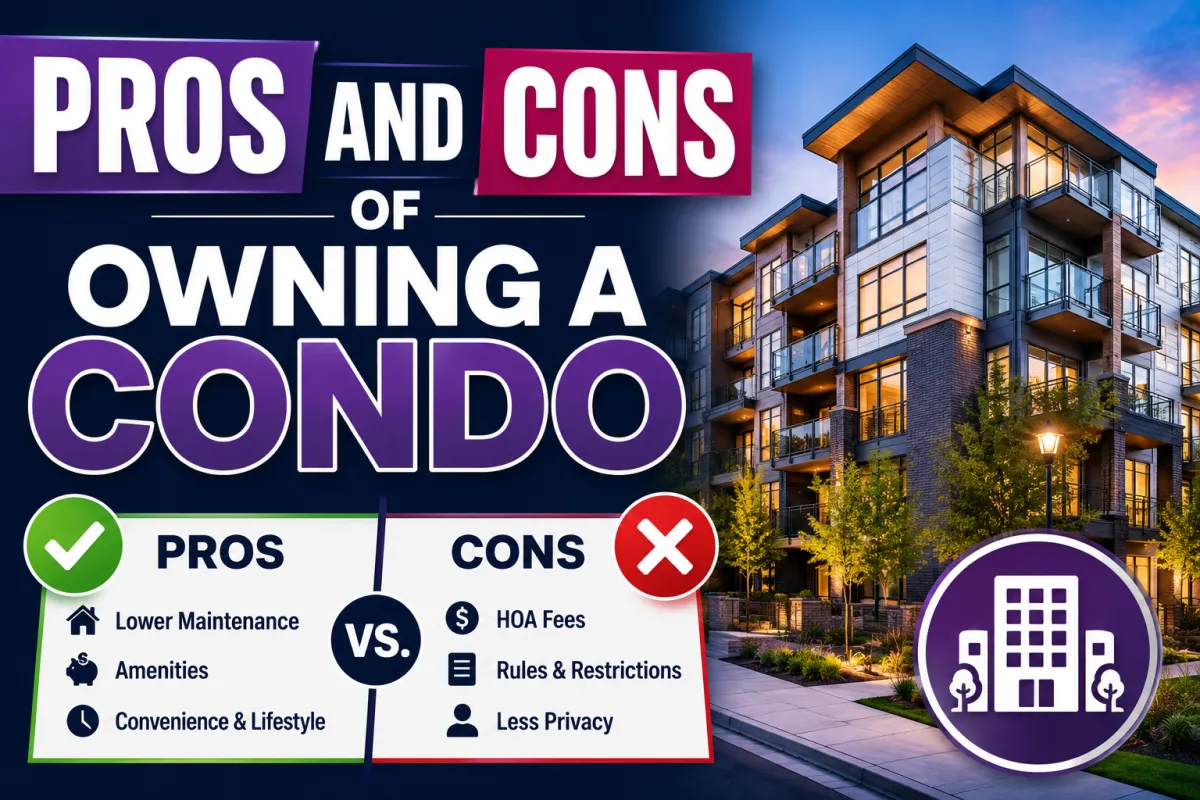
Pros and Cons of Owning a Condo in the Southeast Valley | Nancy Wittenberg
What You Actually Own When You Buy a Condo 1
The Pros of Buying a Condo in the Southeast Valley 2
Amenities You Might Not Otherwise Have 2
Affordability and Entry Price Point 3
The Cons of Buying a Condo in the Southeast Valley 3
Monthly HOA Fees and What They Add to Your Payment 1
Rules, Restrictions, and the CC&Rs 2
Special Assessments: The Risk Most Buyers Overlook 4
Financing Is More Complicated 5
What to Check Before You Buy 4
What This Looks Like in the Southeast Valley Right Now 5
Frequently Asked Questions About Buying a Condo in Arizona 6
Published July 2026 | Home Buying | Southeast Valley, Arizona
Condos make up a real portion of what's available in the Southeast Valley. In Tempe, Mesa, Chandler, and Scottsdale, they're often the most affordable path from renting to owning -- and for buyers who don't want yard maintenance or want to live closer to walkable areas, they can be genuinely appealing.
But a condo purchase comes with tradeoffs a single-family home doesn't. Before you start touring units, it helps to know what you're buying into -- the ownership structure, the monthly costs beyond the mortgage, the rules you'll be expected to follow, and the risks if things go wrong.
This guide breaks down the real pros and cons of condo ownership for Southeast Valley buyers, grounded in guidance from the National Association of REALTORS and applied to this specific market.
What You Actually Own When You Buy a Condo
The ownership structure of a condo is different from a single-family home, and it's worth understanding before weighing the pros and cons.
When you buy a house, you typically own the structure and the land it sits on. When you buy a condo, you own your individual unit -- usually the interior space from the walls inward -- plus a percentage interest in the land, the building, and all the shared spaces. That includes lobbies, hallways, parking areas, pools, fitness centers, and any other common areas the community shares.
That shared ownership is why condos come with monthly association fees and a governing body that sets rules for how everyone uses the property. The association -- called a COA (condo owners association) or HOA (homeowners association) depending on the community -- runs the place. Understanding how it works is central to understanding whether a specific condo is the right purchase for you.
The Pros of Buying a Condo in the Southeast Valley
Lower Maintenance
This is the one most condo buyers list first, and it's real. The exterior of the building, the landscaping, the roof, the parking lot, the pool -- all of that is maintained by the association. As an owner, you're responsible for the inside of your unit. That's it.
For buyers who travel frequently, work long hours, or simply don't want to spend weekends on yard work, that's a meaningful benefit. You're paying a monthly fee that covers all of it, and in exchange you don't have to think about it. In the Southeast Valley's summer heat, that's no small thing.
Amenities You Might Not Otherwise Have
Many condo communities offer amenities that would cost significantly more to replicate in a single-family home -- pools, fitness centers, secure parking, common gathering spaces, walking trails, and sometimes concierge-style services in higher-end buildings. You get access to them without owning and maintaining them individually.
In Tempe and Scottsdale especially, condo communities with resort-quality pools and fitness facilities give buyers access to that lifestyle at a lower per-unit cost than a standalone home would require.
Affordability and Entry Price Point
In most of the Southeast Valley, condos start at a meaningfully lower price point than single-family homes. The median single-family home price across much of the Chandler-Gilbert-Mesa corridor is above $500,000. Condos in many of the same cities can be found in the $200,000 to $350,000 range, depending on the location, age, and size of the unit.
For buyers who want to own instead of rent but aren't in a position to compete for single-family homes at current prices, a condo can be the realistic bridge. Building equity now, at a lower price point, can put a buyer in a better position to move up later.
If you're weighing your options and want to know what single-family homes actually look like at comparable price points in this market, it's worth checking what's available under $600,000 across the Southeast Valley to make a side-by-side comparison with what condos in the same range offer.
Convenience and Location
Condo communities are often closer to employment centers, dining, and transit than comparably priced single-family homes. In the Southeast Valley, that means access to downtown Tempe, Old Town Scottsdale, or the Chandler Fashion Center corridor -- locations where single-family homes sell at a significant premium. A condo can put a buyer into an area they couldn't afford otherwise.
The Cons of Buying a Condo in the Southeast Valley
Monthly HOA Fees and What They Add to Your Payment
Every condo comes with a monthly association assessment -- commonly called the HOA fee. This covers maintenance of the common areas, the reserve fund, management costs, and (in some communities) certain utilities. It's not optional, and it doesn't go away.
In the Southeast Valley, monthly HOA fees on condos typically range from $150 to $400 for standard communities, and can run $500 or more in communities with more amenities or higher operating costs. That's a meaningful addition to your total monthly housing cost.
Your lender counts HOA fees in your debt-to-income calculation. A $300 monthly HOA fee reduces your available mortgage budget -- the same way a car payment does. Understanding how rates and monthly obligations affect what you qualify for is important before you fall in love with a unit whose total monthly cost is higher than you can comfortably carry.
And HOA fees can increase. Boards vote on budget increases, and if operating costs go up -- which they have for most communities as insurance and maintenance costs have risen -- your monthly payment goes up with it.
Rules, Restrictions, and the CC&Rs
When you buy a condo, you agree to follow the CC&Rs (covenants, conditions and restrictions). These are officially recorded with the state and are legally binding. The association also has bylaws for governance and additional rules that can be updated seasonally.
CC&Rs cover more than most buyers expect:
Noise restrictions and quiet hours
Pet policies -- many communities restrict breeds, sizes, or the number of animals allowed
Parking rules, including where guests can park and what types of vehicles are allowed
Renovation restrictions -- what you can and can't change inside your own unit
Rental rules -- whether you can rent your unit, for how long, and to whom
Short-term rental policies -- many Arizona associations now specifically restrict or prohibit platforms like Airbnb
Window coverings, signage, outdoor decor
Violations can result in fines. Some associations enforce rules strictly. Others are more relaxed. You won't know which kind you're dealing with until you read the documents and talk to current residents.
If renting your unit -- now or in the future -- is part of your plan, read the CC&Rs on rentals before you make an offer. Not after.
Less Privacy
Shared walls, shared hallways, shared parking, shared amenities. Condo living is inherently closer to your neighbors than single-family ownership. In buildings with thin construction or poor soundproofing, that affects daily quality of life in ways a daytime showing won't reveal. For buyers with specific privacy or noise needs -- a home studio, pets, a work-from-home setup -- this is worth thinking through before committing to a specific building.
Special Assessments: The Risk Most Buyers Overlook
A special assessment is a one-time fee charged to all unit owners when the association needs to fund a major repair and doesn't have enough in reserves to cover it. These aren't rare. Roofs, elevators, parking structures, pool systems, and HVAC systems in common areas all require periodic major repairs.
If the reserve fund is underfunded when a major repair comes due, the board can levy a special assessment on all owners. These can range from a few hundred dollars to several thousand per unit, depending on the project.
According to NAR, frequent special assessments are a warning sign of poor financial management or a building that costs more to operate than its dues support. If a special assessment is already planned in a community you're considering, you may be able to negotiate with the seller to cover some or all of the cost.
Financing Is More Complicated
Lenders evaluate the condo project itself, not just you as the borrower. The owner-occupancy ratio, the association's financial health, and any active litigation against the building all factor in. FHA and VA loans have their own project approval lists -- if the project isn't approved, those loan types may not be available for that unit. If you're buying for the first time with a low-down-payment program, confirm the project qualifies before you go deep into the process.
What to Check Before You Buy
The due diligence process for a condo purchase goes further than for a single-family home. Here's what NAR recommends:
Talk to your lender and insurance agent early. Confirm the project qualifies for your loan type and get condo-specific insurance quotes.
Request all governing documents. CC&Rs, bylaws, rules, and recent meeting minutes. Have a real estate attorney flag any red flags.
Review the HOA finances and reserve fund. A healthy reserve means less chance of a surprise assessment. Ask for the most recent reserve study.
Ask about past and planned special assessments. Get the answer in writing.
Find out how fines and complaints work. How are violations enforced and how do you submit concerns?
Talk to current residents. A short conversation tells you things the documents won't.
What This Looks Like in the Southeast Valley Right Now
The Southeast Valley condo market has more inventory than it did in 2021 and 2022, giving buyers more time to evaluate before committing. Tempe has the densest inventory in the region. Mesa, Chandler, and Scottsdale all have communities ranging from older affordable units to newer mid-rise buildings at higher price points.
The current Phoenix-area market update covers where conditions stand across price ranges -- worth a read if you're trying to time your decision or understand how much room you have to negotiate.
One thing specific to Arizona: if you're buying with any intent to generate rental income, review the association's rental policy with your agent before making an offer. What's allowed varies significantly from one community to the next, and those rules can change.
Frequently Asked Questions About Buying a Condo in Arizona
What's the difference between a COA and an HOA for a condo?
A COA (condo owners association) is the formal term for a condominium's governing body. HOA is a broader term used across community types -- single-family neighborhoods, townhomes, and condos. Many condo communities just use HOA as the default. Both collect assessments, enforce rules, and manage common areas. The COA structure adds complexity around shared building ownership that doesn't exist in single-family HOAs, which is why condo financing has more moving parts.
Can an HOA stop me from renting out my condo in Arizona?
For short-term rentals under 30 days, yes -- Arizona law allows HOAs to regulate or prohibit them. Long-term rentals are harder to ban outright, but associations can regulate them through approval requirements and rental caps. Check the CC&Rs on rentals before you buy if this is part of your plan.
How do I know if an HOA is well-managed before I buy?
Request the last two years of meeting minutes and the most recent financial statements. Look for consistent dues, a growing reserve fund, and no ongoing litigation. Frequent special assessments or a thin reserve are warning signs. Talking to a few current residents will tell you things the documents won't.
Does the HOA fee count toward my mortgage qualification?
Yes. Lenders include the monthly HOA assessment in your debt-to-income ratio calculation. A higher HOA fee reduces how much mortgage you qualify for. On a $300 monthly assessment, that can reduce your available purchase price by a meaningful amount at current rates -- something to account for when you're setting your budget.
What is a special assessment and should it stop me from buying?
A special assessment is a one-time charge on all unit owners to fund a repair the reserve can't cover. It doesn't automatically disqualify a purchase -- if one is pending, you can often negotiate with the seller to cover it. Frequent past assessments are the real warning sign; that's worth digging into before you proceed.
Is buying a condo in the Southeast Valley a good investment?
It depends on the community, price point, and how long you plan to hold it. Condos in well-managed buildings in desirable locations have appreciated here, but not uniformly. They tend to be more rate-sensitive than single-family homes, which can make values more volatile. For buyers who want a lower-cost entry and plan to hold for several years, a condo can be a solid move. For buyers who prioritize appreciation and flexibility above all else, single-family homes have historically performed differently.
Data Sources: National Association of REALTORS, Consumer Guide: Understanding Condo Ownership (October 2025); NAR 2025 Profile of Home Buyers and Sellers; Arizona Condominium Act (A.R.S. Title 33, Chapter 9).