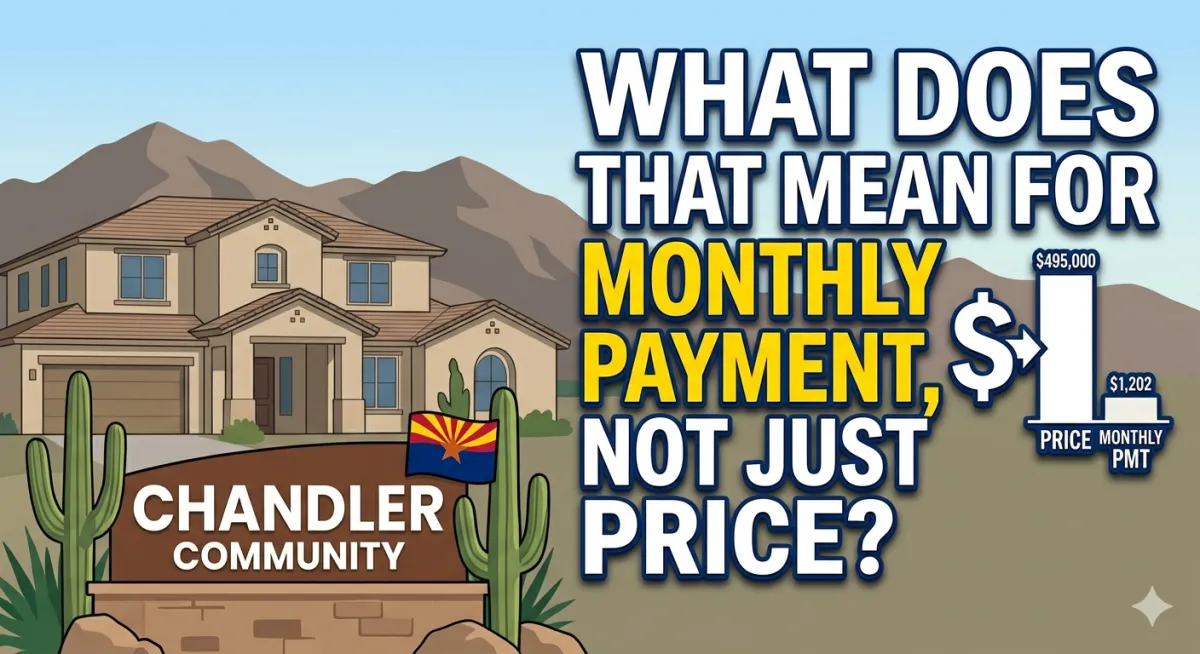
What Does That Mean for Monthly Payment, Not Just Price?
A lot of buyers get stuck on the listing price because that feels like the obvious thing to focus on first.
A $450,000 house sounds cheaper than a $500,000 house. Simple enough.
But that is usually not how this plays out in real life.
Because the actual question is not just “Can I buy this house?”
The better question is: “What will this home actually feel like financially every month after I move in?”
That is the part people underestimate all the time.
Monthly payment changes everything. It affects your stress level, your flexibility, your travel plans, your ability to save, and honestly… whether you still enjoy the house a year later.
I have seen buyers stretch hard for a house because they loved the photos, only to realize later they no longer felt comfortable grabbing dinner out, taking weekend trips, or handling random life expenses without stress.
And on the flip side, I have also seen buyers choose a slightly lower payment and end up feeling way happier because they still had room to breathe financially.
That breathing room matters more than people think.
Especially in places like Chandler, Ahwatukee, Gilbert, and the East Valley overall, where home prices can vary a lot depending on the neighborhood, the age of the home, HOA fees, taxes, and interest rates.
So if you are trying to figure out what actually makes sense for your budget, here is the real-world version of how to think about it.
Not the internet calculator version.
The real version.
Price Is Only One Piece of the Payment
This is where buyers get surprised.
They assume two homes with similar prices should have similar payments.
Sometimes they do.
Sometimes they absolutely do not.
Because your monthly payment is usually made up of several things:
Principal and interest
Property taxes
Homeowners insurance
HOA fees (if there are any)
Mortgage insurance in some cases
Interest rate
That means a home listed at $475,000 in one area could actually cost more per month than a $500,000 home somewhere else.
I know. It sounds backwards.
But this happens constantly.
For example, one neighborhood might have significantly higher property taxes or a large HOA fee attached to it. Another home may qualify for a lower insurance rate. A newer home may cost less to maintain early on while an older home might come with higher utility bills or repair costs.
This is why focusing only on purchase price can get people into trouble.
The monthly number is what you live with.
Not the listing photo.
Interest Rates Matter More Than Most Buyers Expect
This is another thing people tend to underestimate until they actually sit down and run numbers.
Even a small interest rate difference can shift your payment a lot.
Sometimes hundreds of dollars a month.
That is why two buyers shopping at the exact same price point can end up with completely different monthly costs depending on their credit, loan type, down payment, and timing.
And honestly, this is one reason so many buyers keep questioning whether buying right now makes sense, because interest rates can affect affordability almost as much as the actual home price.
A buyer who qualifies for a lower rate may comfortably afford a home that feels stressful for someone else.
Same neighborhood. Same house. Different payment.
That is why smart buyers usually start with payment comfort first instead of maximum approval amount.
Those are two very different things.
Your Comfort Zone Matters More Than Your Approval Limit
This is probably one of the biggest mindset shifts buyers need to make.
Just because a lender approves you up to a certain amount does not automatically mean you should spend that amount.
Banks calculate risk differently than real life.
A lender does not know if you like traveling.
They do not know if you help family financially.
They do not know if you are trying to grow a business, save aggressively, or eventually cut back work hours.
They are approving numbers.
You are living your life.
That is a huge difference.
Some buyers feel completely fine with a higher payment because they prioritize homeownership heavily and have stable income with lots of financial cushion.
Other buyers start feeling anxious once the payment crosses a certain threshold, even if they technically qualify.
Neither one is wrong.
You just need to know yourself honestly.
Because once you own the house, the emotional side of the payment becomes very real.
HOA Fees Can Quietly Change the Math
This happens constantly in Chandler-area communities.
A buyer falls in love with a neighborhood because it looks clean, polished, and beautifully maintained.
Then they realize the HOA fee is several hundred dollars a month.
That does not automatically make it bad.
Sometimes those communities include amenities, lakes, parks, pools, walking trails, or exterior maintenance that buyers genuinely value.
But it still affects affordability.
A $400 monthly HOA fee changes your real payment significantly.
And sometimes buyers would rather put that money toward a slightly higher-priced home in a different neighborhood without the extra monthly fee attached.
This is where lifestyle starts becoming part of the conversation.
Not just numbers.
For buyers who really care about walking trails, green space, parks, and neighborhoods with strong outdoor amenities, paying a little more each month can still feel completely worth it because those everyday lifestyle perks become part of what makes the area enjoyable to live in.
That is the kind of tradeoff buyers have to think through honestly.
A Lower Price Does Not Always Mean a Better Financial Decision
This part catches people off guard sometimes.
A cheaper house is not automatically the smarter move.
Because if the lower-priced home needs major updates, repairs, older HVAC systems, roofing work, or constant maintenance, your actual monthly spending may end up higher than expected anyway.
Especially in Arizona where summer utility bills can hit hard in older homes with inefficient systems.
A home that costs slightly more upfront but has newer windows, updated AC units, lower maintenance needs, or lower insurance costs may actually feel easier financially month-to-month.
That is why buyers really need to stop viewing homes like isolated numbers.
Everything connects.
Price.
Condition.
Location.
Commute.
Utility costs.
Insurance.
HOAs.
Future repairs.
All of it matters together.
The Down Payment Changes More Than People Think
This is another major factor in monthly payment.
A larger down payment usually lowers the monthly payment because you are borrowing less money overall.
In some situations, it can also help buyers avoid mortgage insurance entirely.
But many buyers assume they need a massive down payment to buy at all, and that is simply not true.
There are buyers in Arizona using assistance programs, lower down payment loans, and financing options that make ownership possible much sooner than they expected.
That is why more buyers have been paying attention to financing options that can help lower upfront costs, especially first-time buyers trying to make the numbers work while monthly payments have gotten more expensive.
Sometimes the right strategy is not waiting years to save an enormous down payment.
Sometimes it is finding the payment structure that actually works comfortably now.
Property Taxes Vary More Than Buyers Realize
This one sneaks up on people.
Especially buyers relocating from other states.
Property taxes can vary depending on the area, the age of the home, special assessments, and other local factors.
So two homes with similar prices may still carry different tax bills.
And since taxes are usually built into the monthly mortgage payment, buyers feel that difference immediately.
This is one reason local guidance matters so much.
Online calculators often miss details that actually affect the real payment.
Especially once specific neighborhoods enter the conversation.
Buying Below Your Max Can Feel Surprisingly Good
There is something buyers rarely hear enough.
You do not always need to push your budget to the ceiling.
Sometimes buying below your max creates a much better lifestyle overall.
Less stress.
More flexibility.
More freedom to travel, invest, save, renovate slowly, or simply enjoy life without constantly watching your bank account.
I have seen buyers regret overextending far more often than I have seen buyers regret leaving themselves margin.
And honestly, in competitive markets, people can start convincing themselves that stretching financially is “just what you have to do.”
That is not always true.
You are allowed to want peace financially too.
The Neighborhood Still Matters
Now here is the tricky part.
You also do not want to become so payment-focused that you ignore lifestyle completely.
Because if you buy in an area you do not actually enjoy just to save a little money each month, that can backfire too.
Commute frustration adds up.
Feeling disconnected from the area adds up.
Not liking the surroundings adds up.
Sometimes spending slightly more monthly for a location that genuinely fits your lifestyle is absolutely worth it.
Especially if it improves your day-to-day experience in a meaningful way.
That balance matters.
This is why buyers looking around the East Valley often end up shifting their budget depending on the kind of lifestyle they want, whether that means prioritizing a lower monthly payment or spending more for a newer home, upgraded neighborhood, or stronger community amenities.
The right answer usually comes down to the full picture, not just the cheapest possible payment.
Think About Your Future Self Too
One thing buyers sometimes forget is that life changes after you move.
Maybe you want kids later.
Maybe you want to start a business.
Maybe one income changes temporarily.
Maybe unexpected expenses show up because life happens.
A payment that feels “technically manageable” today may feel very different under pressure later.
That does not mean you should avoid buying.
It just means you should think realistically.
Not emotionally.
Not based on pressure.
Not based on social media.
Real life tends to reward buyers who leave themselves some flexibility.
The Goal Is Not Just Getting the House
This is probably the biggest thing buyers need to hear.
Winning the house is not the finish line.
Enjoying your life after closing matters too.
You want to be able to furnish the house.
Maintain it.
Go out occasionally.
Travel sometimes.
Handle repairs without panic.
Still feel like yourself financially.
That is why monthly payment matters so much more than buyers first realize.
Because homeownership should support your life.
Not consume it.
Final Thoughts
When buyers focus only on purchase price, they usually miss the bigger financial picture.
Monthly payment is what affects your actual day-to-day experience.
That is the number tied to your comfort, flexibility, and long-term happiness in the home.
And honestly, the buyers who tend to feel best after closing are usually not the ones who stretched every dollar possible.
They are the ones who bought thoughtfully.
The ones who understood the full payment.
The ones who gave themselves room to breathe.
Because the goal is not just buying a house.
The goal is building a life that still feels good after the excitement of closing day wears off.
About the Author
Nancy Wittenberg is a Chandler, Arizona real estate agent with Coldwell Banker Realty who helps buyers and homeowners move forward with clarity and confidence. She is the creator of the Buyer Care Plan™, a step-by-step approach designed to guide buyers through the home-buying process with education and support.
Nancy works with both buyers and sellers throughout Chandler and the surrounding East Valley, helping homeowners sell with strategic preparation while guiding buyers through their next move.